I’ve always wanted to see the Three Colours trilogy, and I’m sure originally I knew what it was about. Now, with so many years passed, I have no clue what I’m about to see, and that’s my favourite way of going into a film – with no expectations plot-wise.
In the pool of solitude and crazy grief logic
After watching
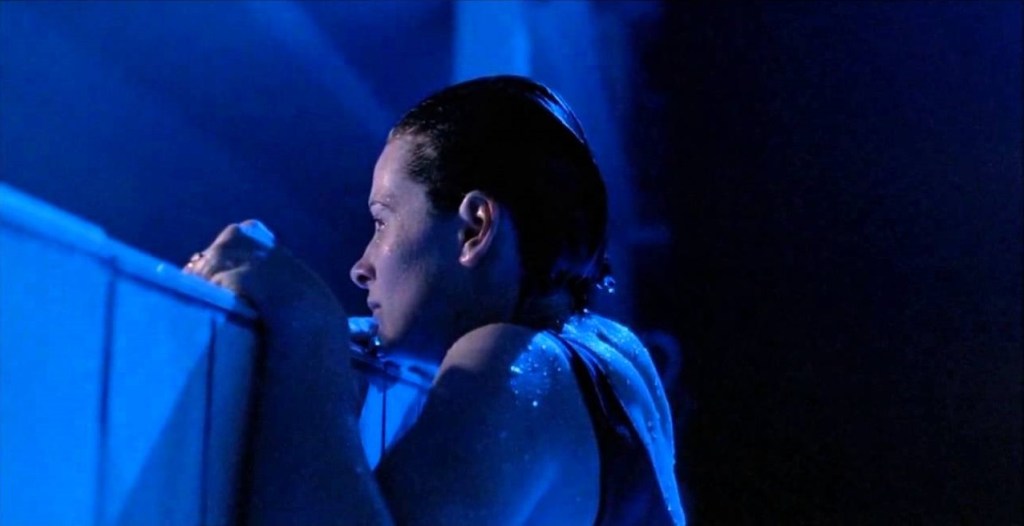
This was a gorgeous story about grief. Grief is such an interesting concept – psychologically –, that I sometimes forget that it’s such an awful experience. Here Julie, a lady of strong convictions, is charting her own way through the dark and stormy waters of life after the death of her family. Her behaviour, even though I myself have never experienced grief, is somehow so very understandable and relatable to me, it really struck a chord. I do feel like you become selfish and possessive of the people you lose, because your anger at the helplessness of the situation just bubbles up that way. It was reassuring seeing Julie manage the hurricane of strong feelings, but also numbness, caused by the deaths of her loved ones, so well. Not at first, but she worked through it, and came out of it happy again.
Thoughts | Lessons | Reminders
“You’ve changed. You weren’t so rude before.” “Haven’t you heard? I had an accident. I lost my daughter and my husband.”
This is an excellent example of people being insensitive. I feel like as with any feelings that are hard to manage from the outside, this is one where if you want to help, let them know you’re there if they need you, and if you don’t want to help, just stay away. I get that the journalist had to do her job, but she could’ve asked a person close to Julie to find something out, as opposed to going in and upsetting a person who just had their whole life turned upside down. Lesson for me: Not a lesson in being less insensitive, because I actually wouldn’t dare talk about anything mundane with someone who is grieving. But definitely a reminder to let the person know you’re there for them. I often try to be sensitive and avoid meaningless conversations to the point where I forget to offer actual support. Grief has to be worked through on the griever’s own terms, but for when they’re ready to let go and step back into the real world, isn’t it just so important to have someone waiting.
“Why are you crying?” “Because you’re not.”
Interestingly, Julie took this quite well, as she seemed to love the lady who was supposedly crying for Julie’s family, because Julie wouldn’t shed a tear. I genuinely can’t say that I know how grief works – I obviously have my guesses, but let’s be honest: that’s all they are.
“But you see, I’m like any other woman. I sweat, I cough. I have cavities. You won’t miss me.”
It’s funny – the kind sof things we tell ourselves when we’re going through something. The logic, when your mind is stressed, is incredible; some things you manage to convince yourself of are positively insane. Lesson for me:Try and not make crazy decisions in the state of stress. Think what three of your friends would say to any decision you make. If they oppose your plan unanimously, don’t be stupid.
“You’ve always got to hold onto something.”
As much as I appreciated que será será life in my early twenties, at some point I realised there always needs to be something pulling you further, something you’re working towards. It seems the same is true about your past. It’s hard to go forward with confidence when you’re not tied at all to your past. As much as Julie wanted a clean slate with her life after the death of her family, there were bits and bobs pulling her back into her past. I’m positive that she wouldn’t have been happy, had she had a clean cutoff. Something would’ve haunted her for the rest of her life. Lesson for me: Find meaning and reason in your roots and past life experience, and draw it back to what you are today. Then don’t forget it – take pride in it.
“Something must have happened to you. You’re not the type somebody dumps.”
As much as people don’t like being classified, there are people who you just see through and can tell what they’re like in certain respects. I don’t know if I should keep doing that or not. Maybe it’s only a privilege left for heroines in French films… Lesson for me: No matter how much someone seems a certain way, keep your mind open and get to know the person before making any assumptions.
“Now I have only one thing left to do – nothing.”
This is what depression sounds like. Lesson for me: The way out of depression is to get sick of nothing and start doing something again. Anything. Just don’t give up – not truly.
In conclusion
This was such a touching watching experience! As with any trilogy, it’ll be hard to follow up on the same level after such a strong start, but I’m very keen to see what we have in store for white and red.
I have pretty good expectations, based on very few things:
Don’t know the director.
Love French films.
Love a good family drama.
Let’s go.
After watching
I’m sorry, this needs to be seen, not written about. It’s not an I’ve-learnt-a-lesson kind of film. It’s the kind of film that reminds you of the hidden horrors of everyday life.
I was pretty keen to either avoid this film, or watch it, but not write about it. The reason I didn’t want to write about it is because I find it hard to express myself regarding trans-issues using words that won’t offend people from trans-community. In my heart, I don’t have anything against transsexuals, but the sadness I feel thinking about them is indescribable. How awful it must be, feeling like you don’t belong in your body.
I’m sure everyone has felt sad about a part of themselves they couldn’t change. I myself went through a phase in my early teens where I didn’t feel female in the slightest. I was convinced that I was a boy born in the wrong body. It took me years to come to terms with the fact that the one thing I could not change was my gender, and now, about 13 years later, I couldn’t be happier to have stayed in my body. Instead of being miserable about what I couldn’t change, I decided to find the parts of being a girl that I liked. I ended up loving it, and I still do; I can’t say that I can imagine what my life could’ve been like if I had decided to change gender through surgeries and hormonal treatment, but I can say one thing – there’s nothing better than feeling at home in your body. As I’ve grown up, it has become more and more acceptable for girls to go through plastic surgery for the sake of fixing parts of yourself you’re not fond of, and I’ve thought about maybe doing it many, many times, because, as I say, I’m not sure there are people who have loved their bodies just as they are – throughout their whole life. We all used to hate some part of ourselves we couldn’t change. However not once that I’ve thought about plastic surgery did I come to a conclusion that it’s worth doing it, because I can’t imagine what it must do to your head – seeing someone else in the mirror, instead of you. My mental image of me is so deeply connected to the body that I’m in, that I feel like I would’ve gone mad if I ever started looking not like myself. This very thought is the main one to have formed my belief of needing to accept your physical self (including your gender) just as it is. I still believe that most realisations and breakthroughs come from changing your perspective, as opposed to changing the external factors to reach happiness.
So to come back to the trans-issue: when I feel sadness about transsexuals, I feel sad about two things:
that society has made them feel like there are expectations about what men need to be and look like and what women need to be and look like
that because of the reason above, they have not found themselves to be perfect, no matter what the combination of their personality and looks
What I mean by this is that if society didn’t have expectations of what you should be or look like, just because of the biological gender that you are, you would most likely not feel like anything needed changing. If anything, your uniqueness in your gender-looks-personality combination would be something to be proud of. Because of course it still is, but the expectations of certain traits are still there, and it hurts not to be fitting someone’s expectations, I know. But the key is to break free of everyone else’s vision of what is acceptable and right, and stick to your own. I might not be quite certain on how I feel about my life, but I know how I feel about me. I feel great about my body (which is far from something you would call beautiful in its conventional sense), because it’s mine. Day by day, I’ve learnt to love it. I feel great about my face, with all of its flaws, again, because I perceive it to be so deeply connected to my personality, and the essence of me.
That journey you go through in the teenage years, of discovering your love for yourself, is the reason why I really disapprove of kids now being allowed to go through gender reassignment before they even turn 18! (This is me saying, if you’ve gone through 20, 30, 40 years of your life and haven’t found a way to love yourself in your body, then maybe changing gender medically is something worthwhile; but as a first solution it may be a pretty dangerous and costly mistake) Going through the gender reassignment as a child they’re missing out on the opportunity to learn the essential life skill of appreciating what they have. They’ll learn from a young age that if you don’t like something about yourself, you can fix it without almost any mental effort. Furthermore, being a social outcast also teaches you a few good lessons in self-love, and if you’re avoiding the conflict of being bullied by changing yourself to look like what the society around you (e.g. bullies) expects you to look like dependent on your behaviour, you only show that you care about everyone else’s opinion of things more than about your own.
Which is why I love queer people, because that reinforces my strong belief that how you behave, who you love and what you look like doesn’t have anything to do with your reproductive organs. Do what ya fancy! And most importantly, it has no bearing on how worthy you are of love and respect; as long as you are a decent human being and treat people like you’d like to be treated.
Now, after this really long explanation of how I feel about the issues regarding trans community, let’s get back to the film. I didn’t want to write about it, but what changed my mind?
I started watching it. 3 minutes in, the tone was set. And I already wanted to comment, because it was love at first sight! There are certain films where you just know you’re going to enjoy them, based on almost nothing, just a hunch… So I thought, if I have such a strong emotional reaction already, not writing my thoughts down would really mean going back on my resolutions already – I’d be breaking the promise I made to myself just last week: to face my thoughts and feelings head-on this year, and to write them down. To reflect on them, and to learn something new about myself.
So let’s go. No expectations, but a very good feeling.
Behind these looks of indifference and disgust hides love, respect and some very good comedy
After watching
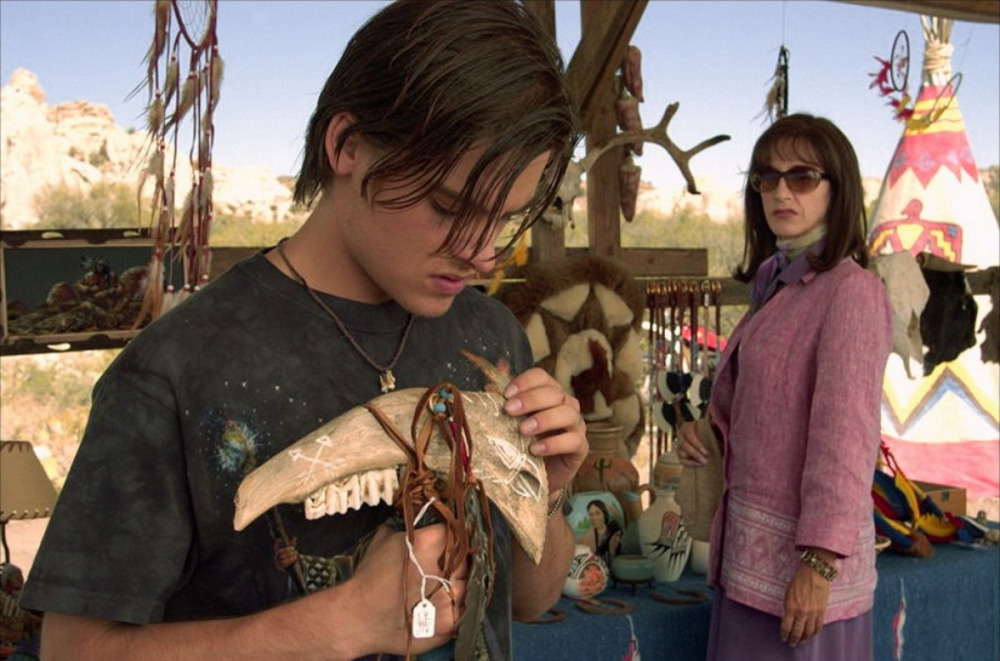
Well, I had the right feeling about this film. It was delightful and I laughed and I cried and I was left with hope. This was such an excellent example of working through some pretty tough family issues regarding unconditional love, acceptance and respect, I really-really loved it.
Just thought that… In the classic feel-good movie plot scheme of a relationship built on a lie exploding, then being followed by eventual forgiveness, they almost convince you that the only way to create a meaningful relationship is to originally lie…
Thoughts | Lessons | Reminders
“Are you happy?” “Yes. I mean, no. I mean, I will be.”
Isn’t this most people’s answer? A socially expected lie, followed by the truth, followed by a more socially accepted truth. I’m not lying to myself about my happiness levels, but I’m perfectly happy to keep lying to everyone else. It’s a journey I want (and need) to be on alone, maybe with some encouragement, but no more than that. Lesson for me: Know truthfully whether you are happy, and if you aren’t, keep working at changing the situation.
“Don’t you find it odd that plastic surgery can cure mental disorder?”
I do find it hard to believe. But the conviction in Bree’s voice was all I needed to hear. As convinced as I can sound when I talk about things, I don’t think you can use the same principles in all cases, or even the majority. So you know, my answer is anything is a possibility – plastic surgery can be a big help in relieving some of the pressures of gender dysphoria, but there’s potentially some other underlying mental issues that won’t just be wiped away with that same solution of gender reassignment. Lesson for me: Nothing in itself is odd. Things are often very possible, if unusual, even if they sound ridiculous.
“Do you still think (…) that I’m a freak?” “You’re not a freak. You’re just a liar.”
I find it interesting when people expect to be told things when you get to know each other. In this case, the first time confronted, Bree said “Just because a person doesn’t blab around her biological history to everyone she meets, doesn’t make her a liar.” And isn’t it so true, how details about every person’s life are theirs, and theirs only to disclose? It’s such a personal thing – I for example feel uncomfortable telling people much less important information about myself, because it feels like such a weirdly intimate thing to be sharing details of what is important to you with random people. Even when you do want to tell them, in most cases your brain tries to find the right moment to do it, to get the best possible response. And is it too much to ask – for some empathy regarding people finding a comfortable way of sharing their life with you? Lesson for me: Don’t get upset when someone hasn’t told you something about themselves that you consider important. There is a million reasons for not having done it, and you can’t possibly know what the real reason is, so let it go and accept the truth gratefully for finally having heard it.
“Dude, there’s things she’s not telling you!” “Well, every woman has a right to a little mystery, dude.”
This is a really good example of being respectful regarding the time you receive the truth. And even though Calvin chose to disclose his sins pretty early on, let’s be honest, there’s secrets, and there’s secrets. And they take different time to come out as intended, with least disruption. Reminds me of the episode of The IT Crowd where April tells Douglas I used to be a man, while Douglas conveniently hears it as I’m from Iran… What a revelation this is; not one to make to someone whom you’re not quite sure what to make of yet, isn’t it?
“I wish just once [my family] would look at me and see me. That’s all. Just really see me.”
I’ve always struggled with this one. My family have always thought so highly of me that it’s been hard to be that person. In my lowest moments I think, do they even really know me? …I can’t possibly be this good. Which, I know, is the opposite of what Bree experienced here, but this reminds me of a sad thought that I’m sure has been expressed many a time in a million different films, but I fell in love with it in a little odd show called Bored to Death. George there said Nobody’s really loved for themselves. Are they? I mean, all love is projection. Think about it, I’m in your movie and you’re in mine, two different films really. We don’t really know each other; we just make a guess at knowing each other, right? I think the same is true about love. And while it’s a bleak thought, I think situations should be played by the ear; in that if someone is thinking highly of you, you should probably if not believe it, then at least make the best of being seen in a good light (i.e. act as if the high praise is true, regardless of whether you perceive it to be true yourself), but if someone’s vision of you is getting you down and upsetting you, George’s sad quote can give you the needed distance to forgive the people for not really knowing you. Lesson for me: Appreciate the good things people see in you. Ignore people’s misunderstandings of you, unless it’s someone very close, in which case it’s probably worth getting through to them explaining the truth.
“First of all, I’m gonna make sure he knows he’s encouraged and supported. And that he’s respected… maybe even… At least that he’s respected.”
It’s odd how sheltered you become growing up in a loving household. Respect is something that I never would’ve thought about growing up. I could have been angry with my parents for making me do things, for not letting me do things, but never for not loving me, not respecting me, not listening to me. That doesn’t mean they always agreed, but that would be a ridiculous thing to wish for anyway. Now, thinking about starting a family soon myself, I am very much awakened to a reality that there’s a million things I didn’t even think about as a child, where there’s a potential for me to go wrong as a parent. Lesson for me: No matter how you raise your kids, the first thing to teach them is that they are loved and respected, which can then become a two-way street. This will also teach them to respect others, which might just be the most important quality to have as a decent human being.
In conclusion
I’m so grateful for having seen this film now. What a fun, interesting, thought-provoking journey. It’s a shame Duncan Tucker hasn’t continued making films, but I’m very, very glad he’s managed to get this lovely picture out. Well worth a watch!
I’ve not seen Breathless before. Jean-Luc Godard films are always fun to watch, because at their core are usually fun, confident, sexy women who approach most situations in unusual ways. From this film I can expect two things: that I’ll have immense fun watching it, and that I’ll get an incredible amount of quotes to dissect.
We’ll talk in riddles until the playtime is over… oh wait no, we’ll continue then as well
After watching
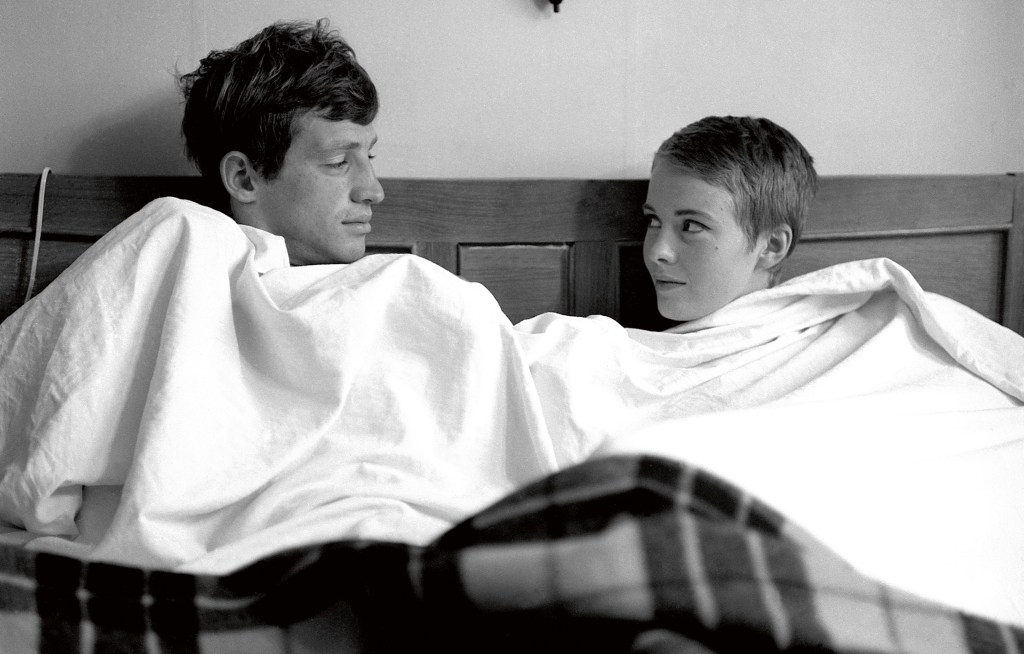
French films rarely serve you any lessons on a plate. Expectedly, this was also a random story full of imperfect characters, where two flawed humans were trying to get each other one the same page about their relationship. It was an immensely fun film to watch.
Thoughts | Lessons | Reminders
Before I begin, I’ll say I got a lot fewer quotes out of this picture than I expected, because I forgot what dialogue is like in Godard’s films. There is a way to convey people’s beliefs and convictions in one long, complete sentence, explaining the conviction explicitly, and there is a way to convey them through series of short, seemingly meaningless statements, sprinkled throughout the film, with many things left unsaid. Godard definitely belongs to the second category, because his characters talk about the silliest things while representing a lot more than what they say.
“I don’t know if i’m unhappy because I’m not free, or if I’m not free because I’m not happy.”
I’d go with the second one, because everything stems from not feeling happy. Happiness is a hard concept to achieve because there’s many things that we think might make us happy, but in fact this feeling comes from internal assurance that you’re happy with what you’ve got, no matter what you’ve got. Lessons for me: Be grateful for what you have -> love what you have. Do things that you want to love until you love them, but don’t assume that happiness is something you need to work for externally – it’s all in the thinking. Develop positive thinking patterns about what you already have.
“I’d like to think about something, but I can’t seem to.”
I feel like that most of the time, hence this blog where I make myself think about very specific things that I subject myself to. I feel like it’s a generally exhausting task – coming up with ideas without any inspiration. I’m very bad at improvisation and on-the-spot ideas. Lesson for me: Start practising coming up with random ideas.
“A woman’s all half-measures. It gets me down.”
I can’t think of very many things that I would have an extreme opinion on. And I do think it’s a classically female trait, but it’s because biologically women are weaker and hence need to be more agreeable to survive. So I’ve found that indeed I lean more towards open-mindedness (almost so as not to offend anyone, however I’ve learnt to love it and prefer it to extreme views set in stone), which can certainly be annoying for someone who just needs to get an answer out of me. Lesson for me: As I said, I don’t find not being able to make my mind up a massive issue, as it gives me flexibility to approach any topic with readiness to take in new information. I do find that often, however, I do make my mind up and don’t speak up – so as not to offend or upset anyone –, and it is making me miserable when I end up having to suffer unpleasant consequences. There is a lesson in having the confidence to share my views or opinions when I do have them.
“I told you, the worst flaw is cowardice.”
Again, I find cowardice a female trait due to biological implications. But me being born into the a culture different from my family’s, I think that growing up, cowardice has kept me safe in the sense of me not offending anyone. And it’s a nice cosy feeling – not having to put yourself out there and risk rejection. Until you realise you’re becoming stale and not really moving forward. Lesson for me: Do things that scare you, push yourself into uncomfortable situations… Grow again.
“Are you scared?” “It’s too late to be scared.”
I think this is the only way I don’t get scared – when there’s no room for it left. If I have any chance of getting out of an uncomfortable situation, I’ll get out of it, but once one of my feet is in it, I’ll go all in. Reminder for me: Do this more often: don’t leave yourself any ways out.
In conclusion
Breathless was such a fun intro back into Godard! MUBI is having his special on, so I’m sure I’ll be back trying to decode something from the misleading quotes pretty soon again!
I have only seen one Ingmar Bergman film (Wild Strawberries), and if I’m honest there’s no reason why it’s the only one I’ve seen. Sadly at this point (10+ years later) I don’t remember almost anything about the film except for how much I loved it, and not mindlessly, but really, truly loved it to its core. My initial expectations for Three Strange Loves are pretty high, for both my overall enjoyment of the film and the moral background. Although I’m aware of the 3.5 star viewers’ rating that jumped at me as I was choosing the film.
Crazy people teach the best lessons
After watching
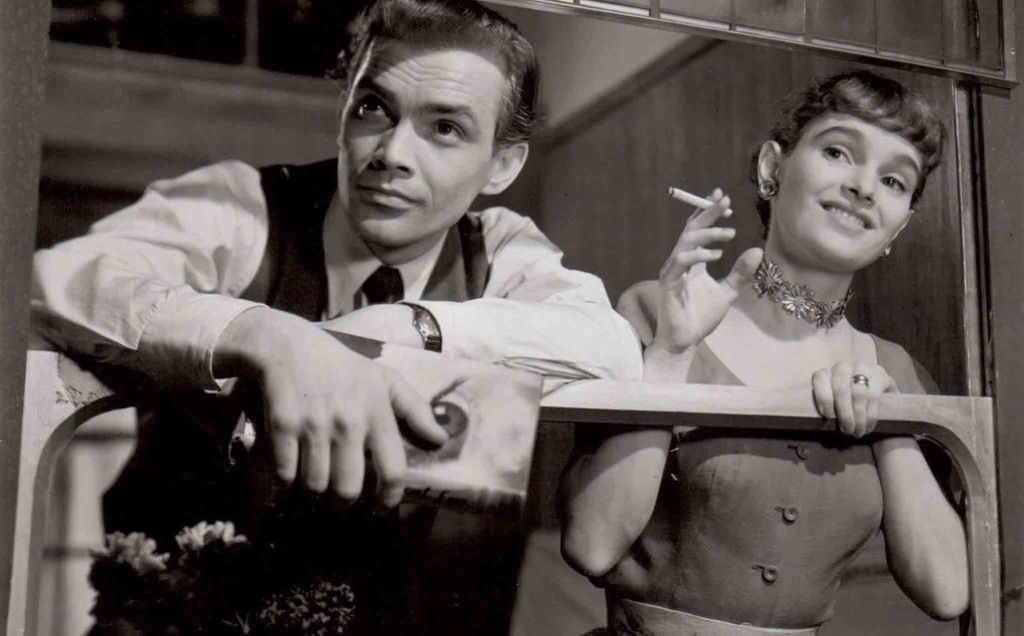
It’s interesting to note that the original title in Swedish is Thirst, which I found appropriate in the “thirst for something that’s not there” sense throughout the film. The title adopted in the UK is Three Strange Loves, and while I agree that the love stories expanded on are strange in some sense (not as uncommon as you could hope though), the maths really threw me off. I felt like there was two main storylines, plus quite a few (not one!) side stories intertwining the main two. But three loves?! More like either 2 or 5! I have more things to say about the film, but just needed to get this very important calculation error out there…
The balance of the stories told was quite off in my opinion. I never got a feeling of a good flow in the film, and this was definitely not due to direction. The acting and the pace were so good that I’m now remembering watching Wild Strawberries and being pleasantly surprised how the film gripped me, even though an old black and white foreign film would probably not elicit that expectation. I can absolutely see the underlying plot being interesting as a book of short stories (which I think it was), but not quite as a film. Although I think this film was the best possible transition of those tales onto a cinema screen.
Thoughts | Lessons | Reminders
“I am an honest person, I’ve never tried to hide that I have two women! A sound man has to have two women.”
This line was said with the utmost confidence, after being caught, to the two women in question. It turns out that with enough confidence you can say anything you want, and until there’s context, it’s all very easily believed. Lesson for me: I tend to be the first one to doubt the validity and often the worth of what I’m saying. Not to say this is to be used with stupid statements like the above quote, but I was shocked how the self-assured delivery of this line made me first think “Am I the backwards-thinking one here?” …Oh the difference that me making statements in a confident manner could make to people perceiving me differently.
“What use is a heart to a dancer who can’t use her legs?”
There are two ways of thinking about this, and Ruth here clearly chose to wallow in her misery. Humans are a resilient race – I used to dance and also had an injury that stopped me from carrying on altogether. It hurt for so long to have to say goodbye to that awfully important part of my life, but eventually it seemed silly not to get used to living differently, as opposed to longing for the old ways. Reminder for me: No lesson here, just a pleasant reminder that I’ve chose the right path. Ruth ended up holding so much bitterness towards everyone around her that she poisoned herself and her marriage, and seemingly any chance of being happy with what she’s got.
“Pure wishful thinking! The two sexes can never be united. They’re separated by a sea of tears and misunderstandings.”
Not always, but when they are, can’t it sometimes be a great union nevertheless? Reminder for me: Again, not necessarily a lesson, but a reminder that I’m not one for strong views. I feel slight self-loathing after any definitive statement I make (aren’t they just so pretty? So assured and confident and magical… and rarely true), because I’ve grown up learning to defend both sides of the argument, and solving problems on a case-by-case basis, not by offering a one-size-fits-all solution that can be contained in a (rhyming?) quip. While this often makes me feel pretty reasonable, especially in our golden age of opinionated madness, it’s a hard thing to resist. It’s hard to grip people by saying “I can see merit in both sides”. Our weak attention span is destroying the ability to listen on, after not perceiving a clear opinion from the first statement.
“Admit that your whole life has been one long mistake.”
Said the psychiatrist to a grieving widow. No, this is not a joke, this was an absolute shock of a doctor, trying to sleep with his patient. I listened to the whole exchange in disbelief, during which I’ve started seeing that again, with enough confidence, and using the shock factor in your favour, you can certainly make people believe the craziest things. Lesson for me: Although I do love hearing the other side of any opinion that I hold, I can certainly see how by exploiting the reason in us (“The statement is so ridiculous, why would they be lying to me – hence this must be the truth and I best open my mind to this mad idea!”) some pretty crazy ideas can be brought to the table. The lesson is not to let people get away with insane rhetoric.
“Oh yes, you talk quite a lot, but in fact you say nothing. What are you holding back? What are you keeping from me? Just be normal!” / “I talk and go on like a machine gun. It’s because I’m afraid of the silence.”
I feel like in the past few years I’ve definitely gotten better at not blabbering. It’s come over me like a wave of fatigue over words that mean nothing, and are only supposed to fill up (the uncomfortable) space. If I don’t know what to say, I now prefer not to say anything if I can. I used to be afraid of the silence, but now it’s just another thing in the room with me, I even quite enjoy it. It’s the holding something back part of the quote that intrigues me more, since it’s also true that by listening I forgo speaking. I often don’t speak because I’ve found that many people who enjoy quick conversations are uncomfortable with unexpected answers and undecided, inbetween opinions like mine. Telling certain people even the most insignificant facts about my life often feels deeply unpleasant, as I feel like I’m revealing more of myself than they deserve or are willing to understand. But it definitely feels like something that I need to learn how to do; communication is such a key part of human experience, and I feel like my skills in it are quickly deteriorating, partly as I’m becoming more comfortable with longer silences. Lesson for me: This lesson is building on the first one. It’s about the importance of not talking meaninglessly, but even if less, then with more impact, as staying silent erases me from existence. It doesn’t need to be loud, it just needs to be confident and unwaivering in my (lack of?) position.
“Try to understand that the main thing isn’t to be loved, but to love.”
This will be hard to believe, but this sweet line was spoken by the psychotic psychiatrist. Of course it was followed by insane reasoning for how he is doing her a favour by being a kind, selfless volunteer who is ready to accept her love. And she shall give in. Now, forgetting this mad context, the truth in these words is so very powerful. First of all, because you can only control yourself and your feelings. When put like that, it sounds weird that we ever put our confidence or importance on the shoulders of someone else seeing you a certain way. In most things, the only truth is your truth, and even thinking about getting a consensus about the truth is exhausting, so why not just trust yourself to the only person you have power over? Why not be the decisionmaker? Lesson for me: This is one of those things that I can keep telling my friends and loved ones a thousand times over, but find almost impossible to trust myself to love myself. I know the quote talks about way more than love towards yourself, and in any way it’s an excellent principle, but as we’re learning lessons here, the biggest challenge for me is loving myself. It might be because I know so many of my flaws and it feels like giving up when I try to accept myself with those flaws. It might be because I don’t quite understand what there is to love, because I don’t understand myself… but that’s just where the self-discovery in this blog should lead. So the lesson is as simple as I’ve always known it, while I’ll stay on high alert looking for ways to internalise its meaning.
“The stab of pain – what do you know of that?” “You tell me about it day and night.”
This is such a basic issue… assuming that everyone else has got it all figured out. That you are the one with the hardest life, with the most unsolvable problems. I approach this feeling with an excuse of sorts – instead of saying They have it better than me, I say to myself They are too good to be suffering from the same stupid issues as me. I put myself down more than I do other people, purely because it feels like a cruel assumption that others are leading miserable lives. And to round this off with an even more obvious statement: you can’t think of something that you don’t know exists if you don’t know it exists. While people I admire or think more highly of might not have the same issues as me, I’d say it’s a surefire statement that they have some other issues in their lives. But as much as I believe that, it’s hard to feel for others when not quite grasping their actual challenges. Lesson for me: I don’t even know what to do here. I find it difficult to talk about challenges I face with anyone but a handful of people closest to me, so I can’t even do my part in spreading the word about “everyone has issues”. Not that people can’t guess by looking at me already! I’m joking only partially because I know I don’t exactly come off confident or care-free. In perceiving others I guess I can only try and imagine problems they might face, since I don’t think many people take too kindly to “tell me about your life challenges”.
“They’re so busy surviving that they have no time for a spiritual life. One could almost envy them!”
That’s exactly how I feel. It was lovely not to think about something so important for a long time, even though now I have all this catching up to do. It’s not awful, since I’ve found a pretty enjoyable way of making up for the lost time, but it was easier not thinking about it at all – obviously. Lesson for me: When you’re not busy surviving, don’t leave your “spiritual life” on the backburner.
“No not rest, I daren’t rest – I have to feel rested to rest!”
This was one of the weird quotes that I expected to laugh at, but isn’t it so true when you think about it? Lesson for me: Sleep is important, but it won’t be a good one if you keep stressing yourself out during the day.
“Nothing takes root in me anymore, it’s all muddy inside!”
That is also how I feel regarding the question of spiritual life. Because I’ve lost touch of what I am, I can’t tell apart things that I enjoy and don’t; things that I want to be/do/have or not. Lesson for me: A clearer vision will aid in better growth.
“You took away my lust for life!” vs “It’s my fate to always meet hysterical women.”
This ever so slightly regards the love vs be loved quote. The control of our stories is ours, because the narrative you have in your head is the truth for you. It’s hard to keep thinking you’re a loser while not feeling like one. So when you create a negative narrative, it becomes unimportant whether it was originally true or not. It becomes the truth because it is your truth. I find this really challenging on a personal level, because I always feel like I’m cheating myself when I put a positive spin on a story of mine that originally had a negative connotation. In the two pretty bad examples in the quotes above I would still overcome the fixed thinking patterns and say “I need to regain my lust for life” and “I used to always meet hysterical women, but I think you could just be the turnaround” – oh isn’t this easy to do with other people’s problems? Lesson for me: Be more mindful of how you think about your past. Bitterness will get you nowhere.
In conclusion
Even in this one post I felt like repeating myself a lot. At first I thought I’d promise to get my posts shorter and shorter as I’ll be revisiting themes I’ve already written about, but in fact now I think that writing about the same ideas will potentially help me internalise more of the lessons more effectively. So as this blog is mostly a self-administered therapy tool, unfortunately you’re in for more repetition than you’d potentially expect in a more reader-oriented blog.
To conclude about the film, this was a steady start with something not too great, but also definitely not too shabby. I’m sure I’ll be going both higher and lower in the quality of the analysed films in the next year.
 Images Of